
Enhancing Team Creation and Joining Through User Data and Requests
Who is Nostragamus
Nostragamus is India's first prediction-based fantasy sports app, where users win cash and rewards by predicting outcomes in live matches across cricket, football, baseball, and other sports. It was built with a single, specific bet: that the Indian fantasy sports audience needed a product designed around their behavior, not a localized version of an existing one.
Since launch, that bet has paid off — the platform has grown to 5 million registered users and tens of thousands of daily actives, generating ₹7 crore in annual revenue. But growth at this scale surfaces friction that didn't matter at 10,000 users. This case study is about one piece of that friction: team creation.
Power Users Were Hitting a Wall
Our most engaged users — the ones with stat sheets open across three tabs, refreshing for the playing XI — were the ones most punished by our product.
Here's what that looked like in practice: a user builds their first team. To build a second, they have to hold the first team in their head, recreate most of it from scratch, and manually adjust a few players. Multiply that by five or six teams, in the ten-minute window between team news dropping and the match starting, and you get a workflow that actively fights against the behaviour we wanted to reward.
What currently happens in Numbers
78%
Power users requesting faster team-editing
39%
Users joining contests with fewer teams than intended
13%
Users missing their best-performing team due to management friction
Finding what could be the best solutions
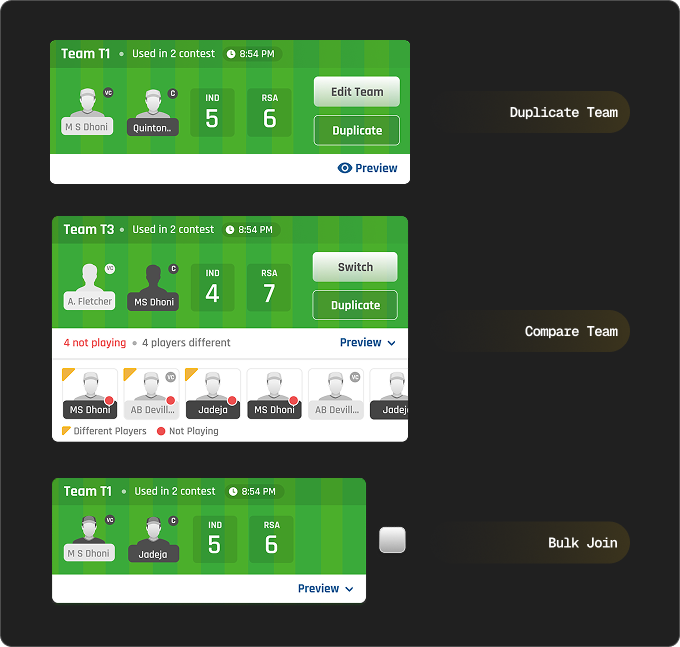
Duplicate Team
The foundation. Any existing team can be duplicated in one tap, opening a prefilled team sheet with the original lineup intact. From there, users make targeted changes rather than rebuilding from zero. This was the unglamorous but necessary first move — without it, the other two solutions had nothing to operate on.
Compare Team
Speed without visibility creates a new risk: users duplicating teams so fast they don't realise how similar those teams actually are, which defeats the purpose of building multiple teams in the first place. Compare Team addresses this at two distinct moments during creation and during contest joining.
Bulk Join
Once teams are fast to build and easy to trust, the last friction point is the most literal one, joining one team at a time. Bulk Join lets users select multiple teams and enter a contest in under 20 seconds.
Duplicate team
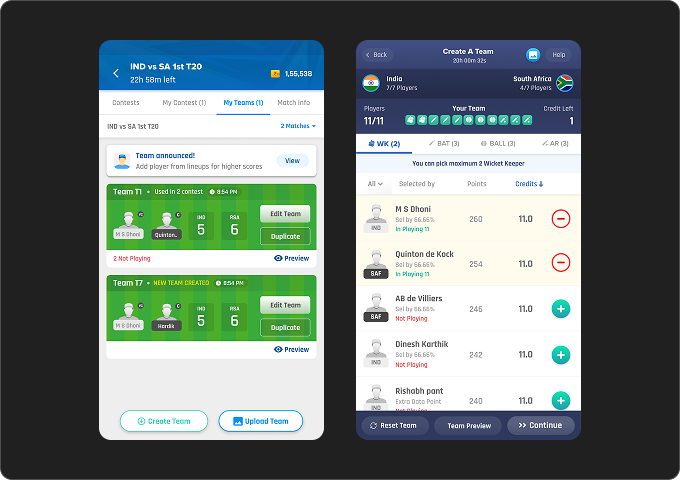 Duplicate
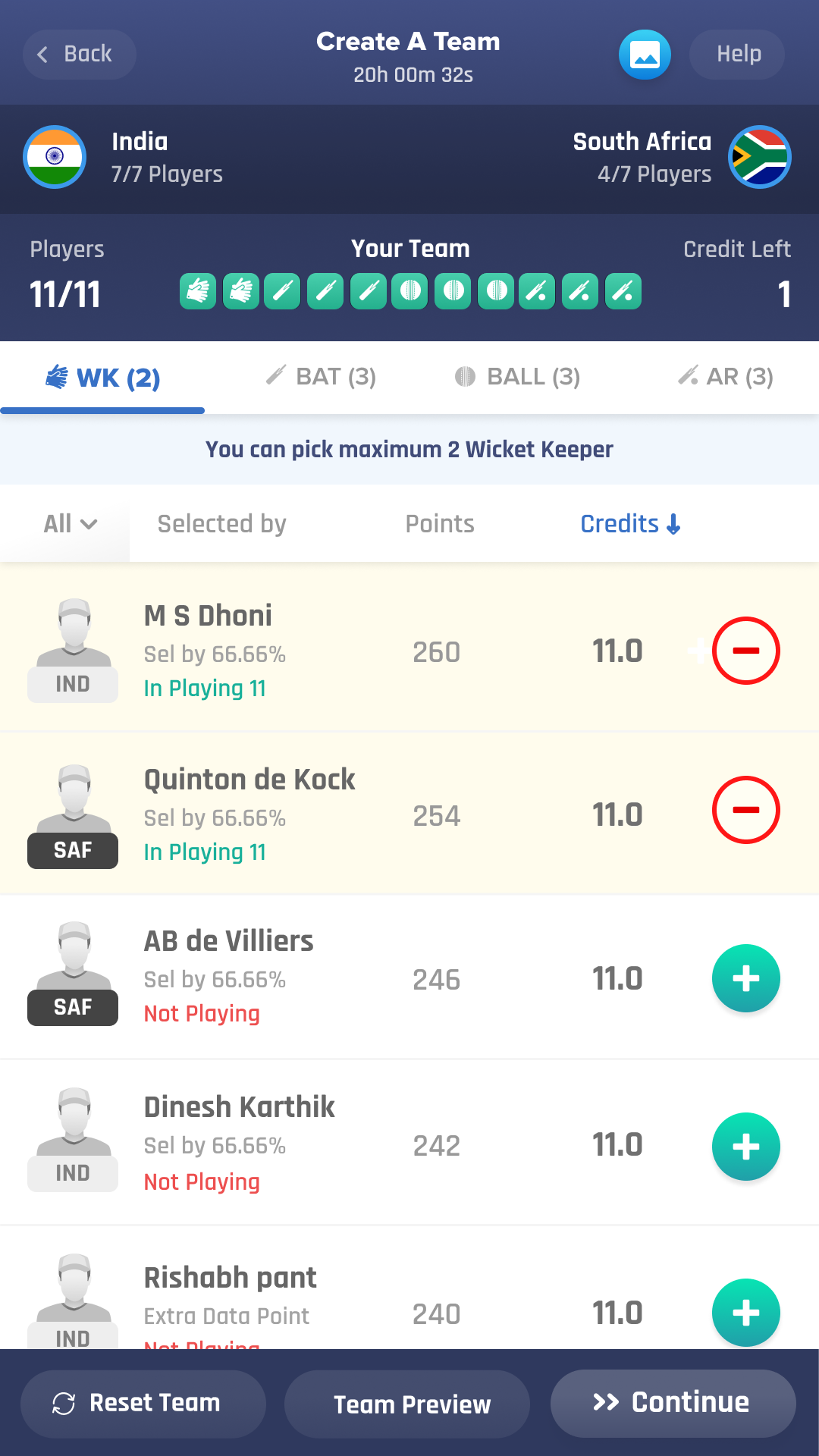 Prefilled
Duplicate
Quick access to the duplicate action on any team you have created for creating multiple teams on the go. Once the team is created you will have the tag on top with option to quick preview
Prefilled
The duplicate will open a team sheet with all the prefilled team that you have choosen to duplicate, you can make as many changes and create a new team
Compare team
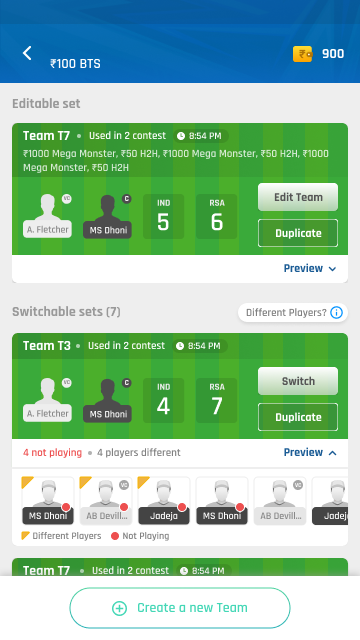 Preview
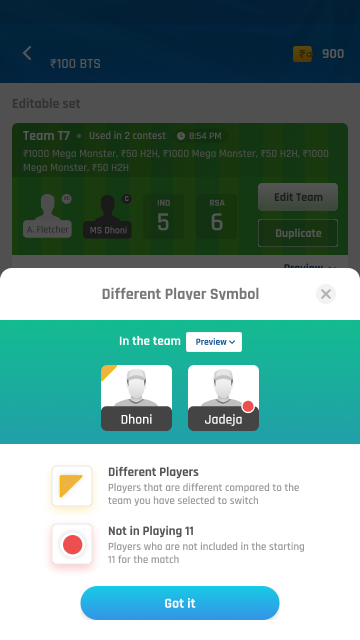 Quick Info
Preview
A quick preview shows how a new team differs from teams already built, so users can make differentiation a deliberate choice rather than an afterthought
Quick Info
As this is done for the first time in the fantasy selection experience. We have introduced a detail card for users to know what kind of information they get in here.
Bulk Join
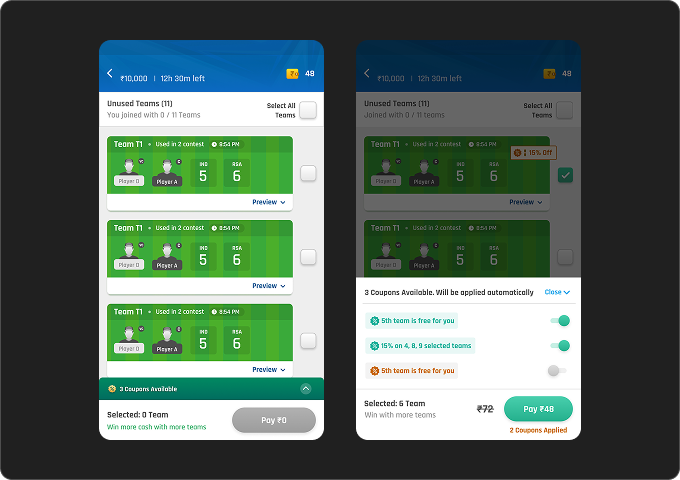 Bulk
Bulk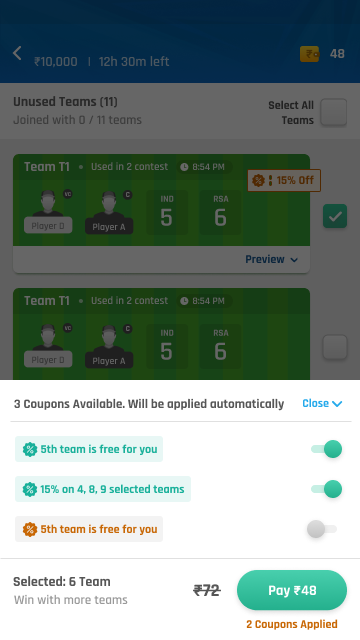 Offers
Bulk
As simple as it sounds, the users will have an option to select multiple teams on the go. This helps for users to join fast to contest in quick time so they don’t miss the contest slots.
Offers
To motivate users to join with more teams, we introduced a stepper offers as they add teams. More team means more chance on winning the tournament.
Philosophy and What I'd Take Forward
Speed and confidence are not the same problem, even when they look like one. It's tempting to ship the fast fix and call it done. The real win here came from refusing to stop at "make it faster" and asking what fast would break if we didn't also solve for trust.
We can't engineer perfect outputs, but we can engineer better inputs. Our job wasn't to guarantee winning teams — that's not ours to promise. It was to remove the friction between a user's knowledge and their ability to act on it. That distinction kept the team honest about what we were actually designing for.
The best signal was the users who were already trying hard. The 76% asking for faster editing weren't disengaged users churning out — they were our most invested users, telling us exactly where the product was working against them. That's a different kind of feedback than a feature request, and it deserved a different kind of response than a single feature.
Outcome on the new experience
28%
Overall platform jump
33%
Users joining with 2+ teams
8 min
Total reduction in time, for team creation for a single tournament